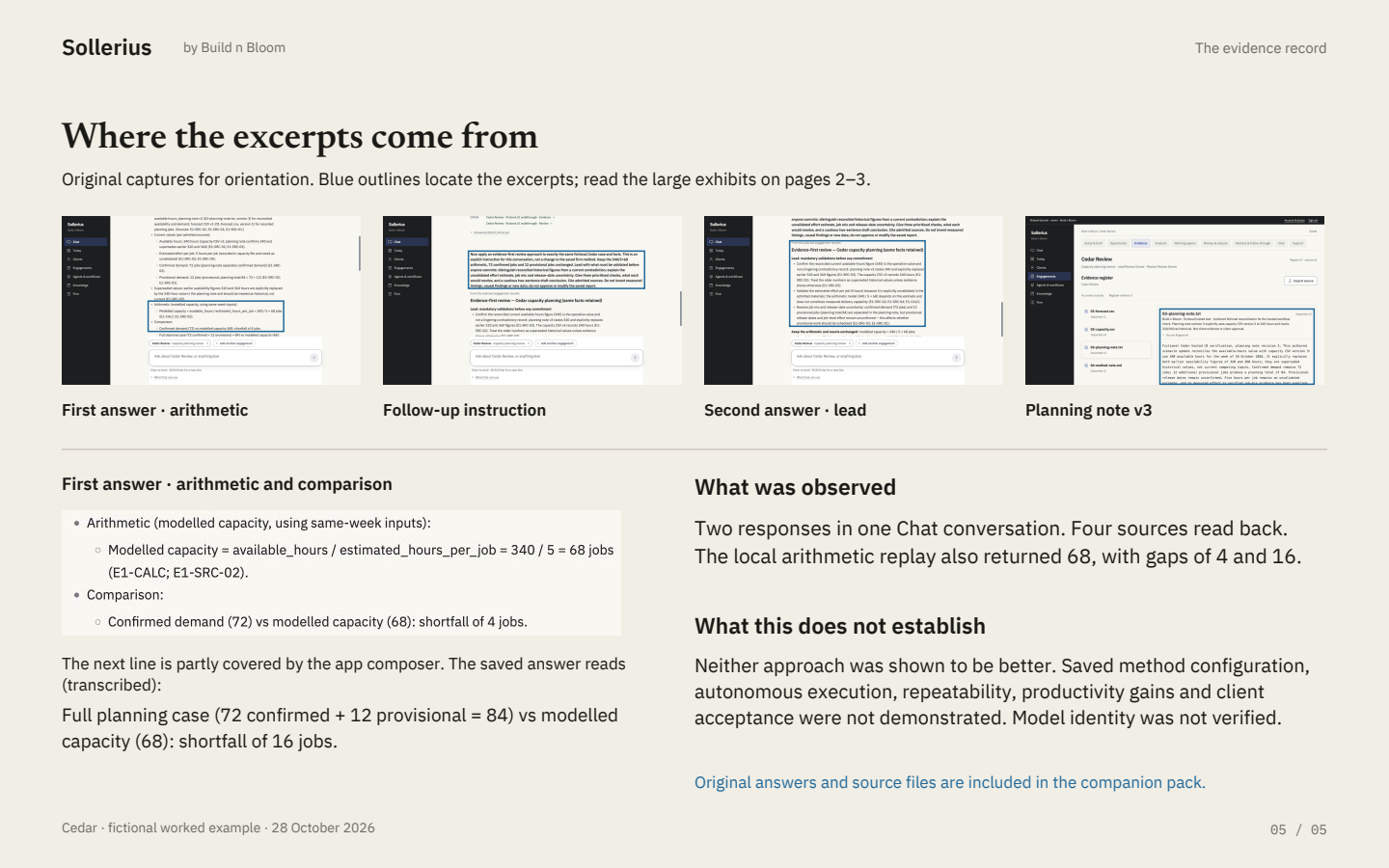
Two requests in Sollerius Chat used the same fictional Cedar records. Changing the review instruction changed the order of the answer. It did not change the figures—or remove the need for judgement.
Observed 28 October 2026. The second request followed the first in the same conversation; this is not an independent experiment or a customer result.
First, separate the facts from the estimate.
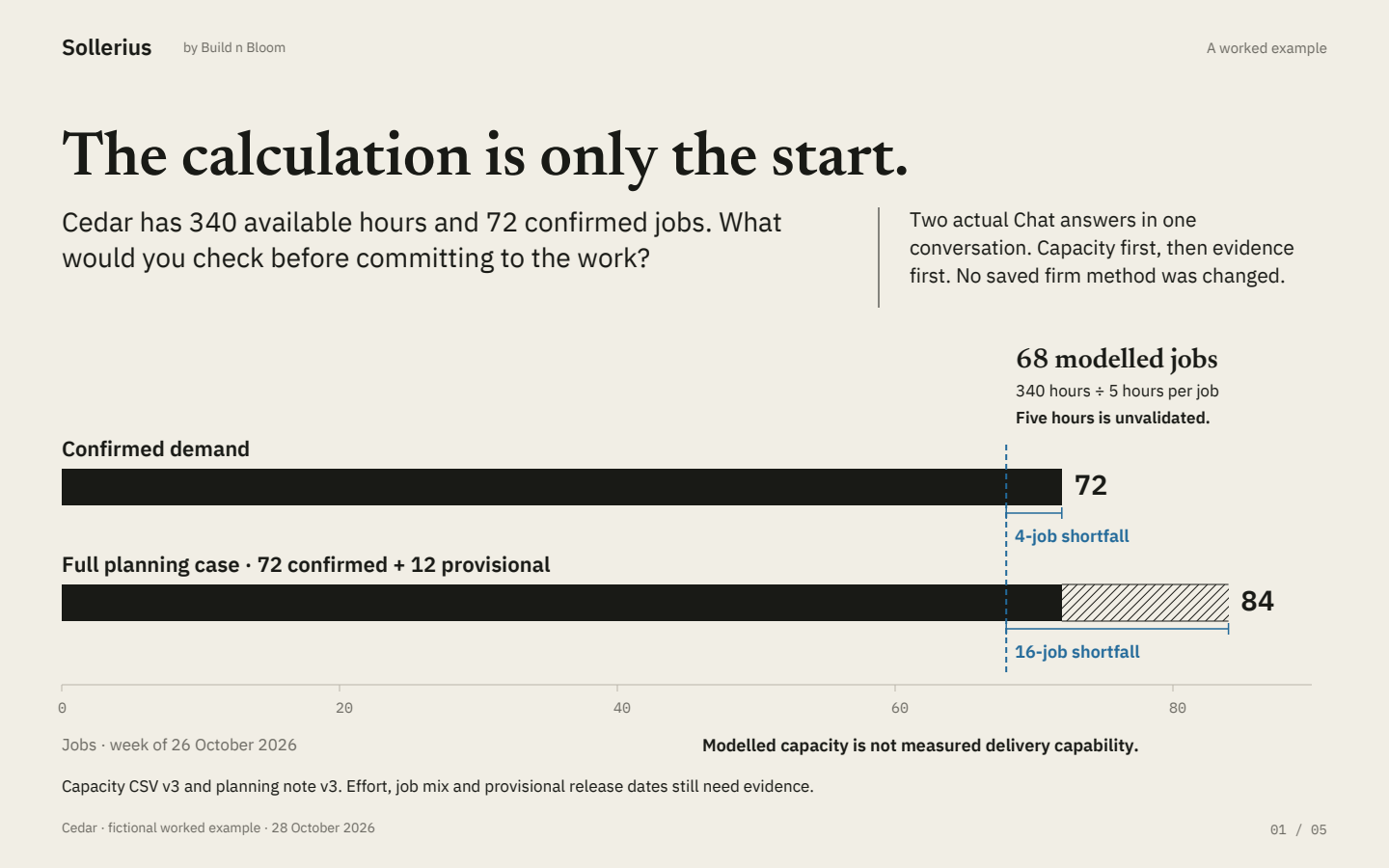
The current capacity file records 340 available hours. The planning note separates 72 confirmed jobs from another 12 provisional jobs. The estimate of five hours per job has not been validated.
The arithmetic is correct for those inputs. It does not establish actual delivery capacity or justify a staffing commitment.
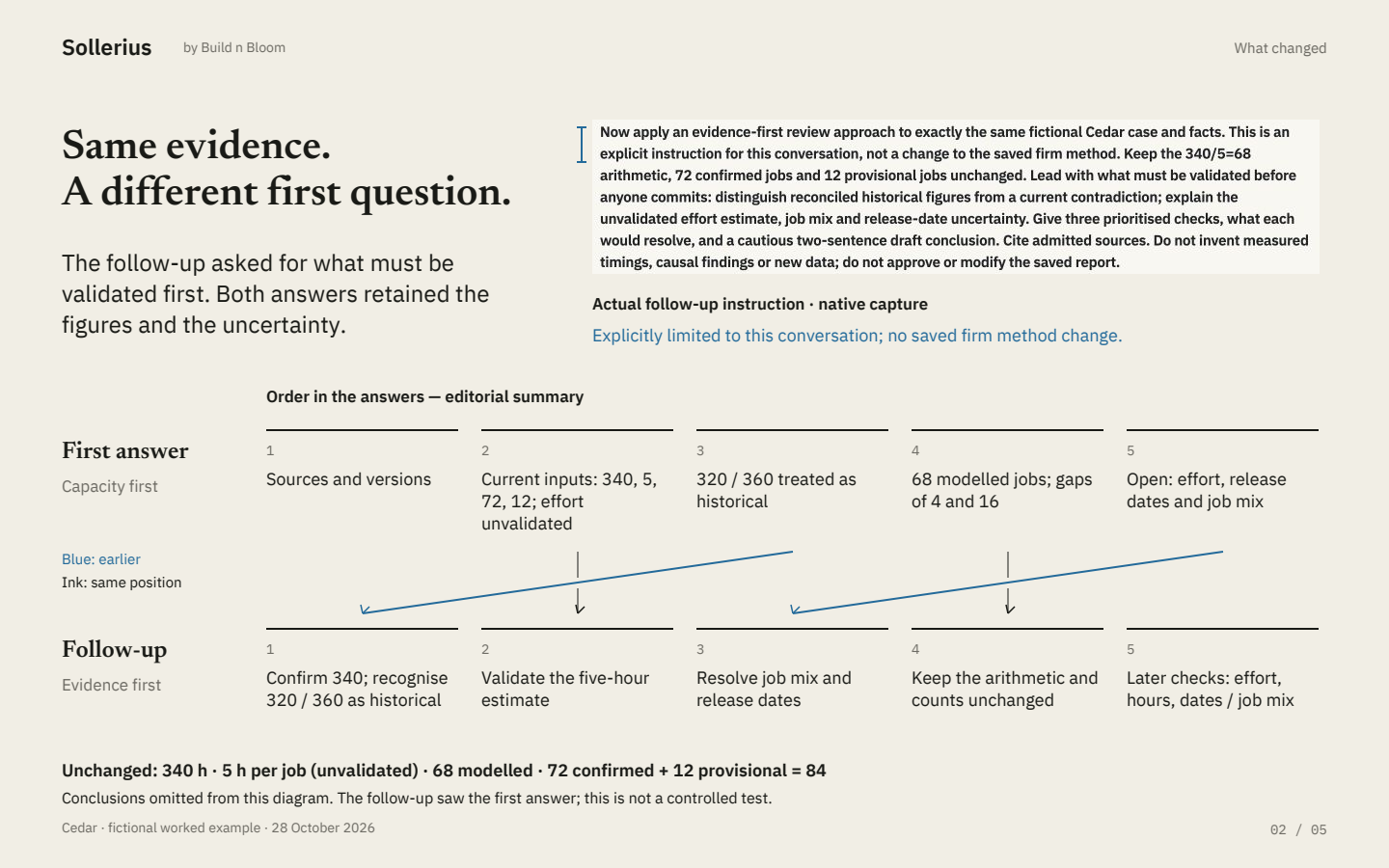
The instruction changed what came first.
Capacity first
The first answer begins with source versions, current values and the calculation. It then asks which provisional jobs, release dates and effort estimates need checking.
Useful for: inspecting the model and seeing how the shortfalls were calculated.
Evidence first
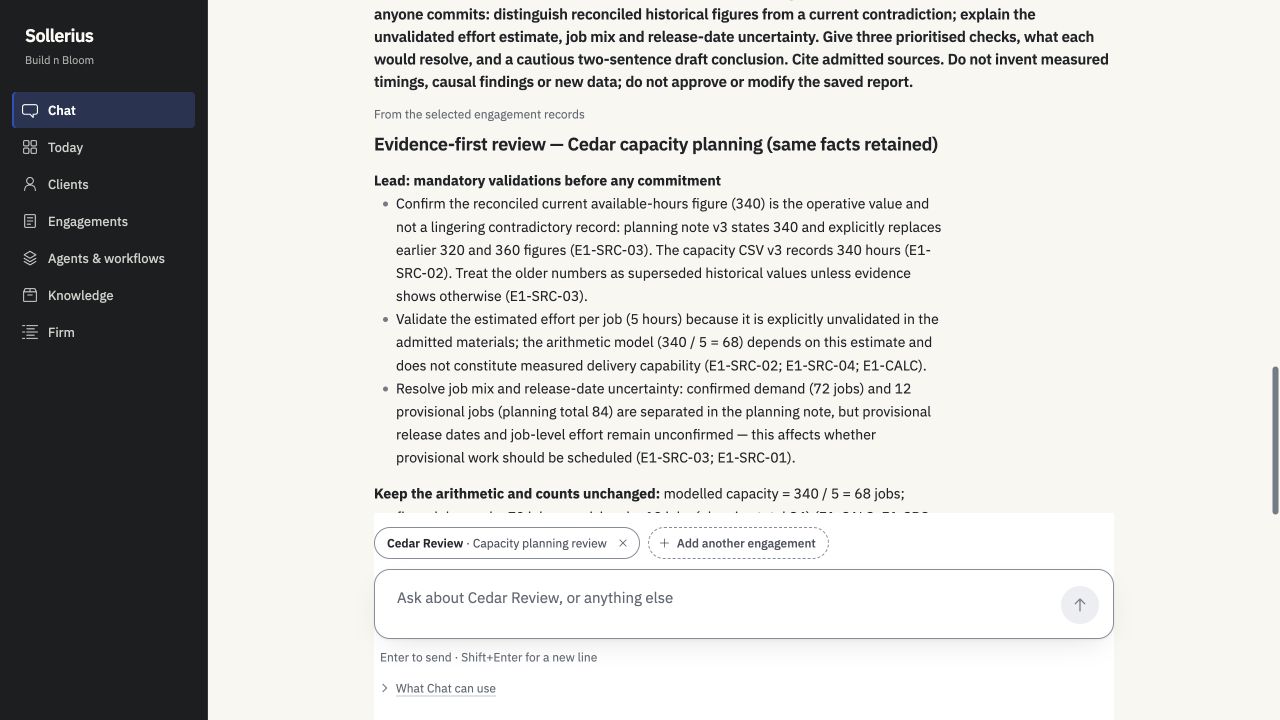
The next answer puts validation work before the calculation: effort per job, the available-hours figure, and provisional timing and job mix. The counts remain 68, 72 and 84.
Useful for: deciding what needs checking before acting on the model.
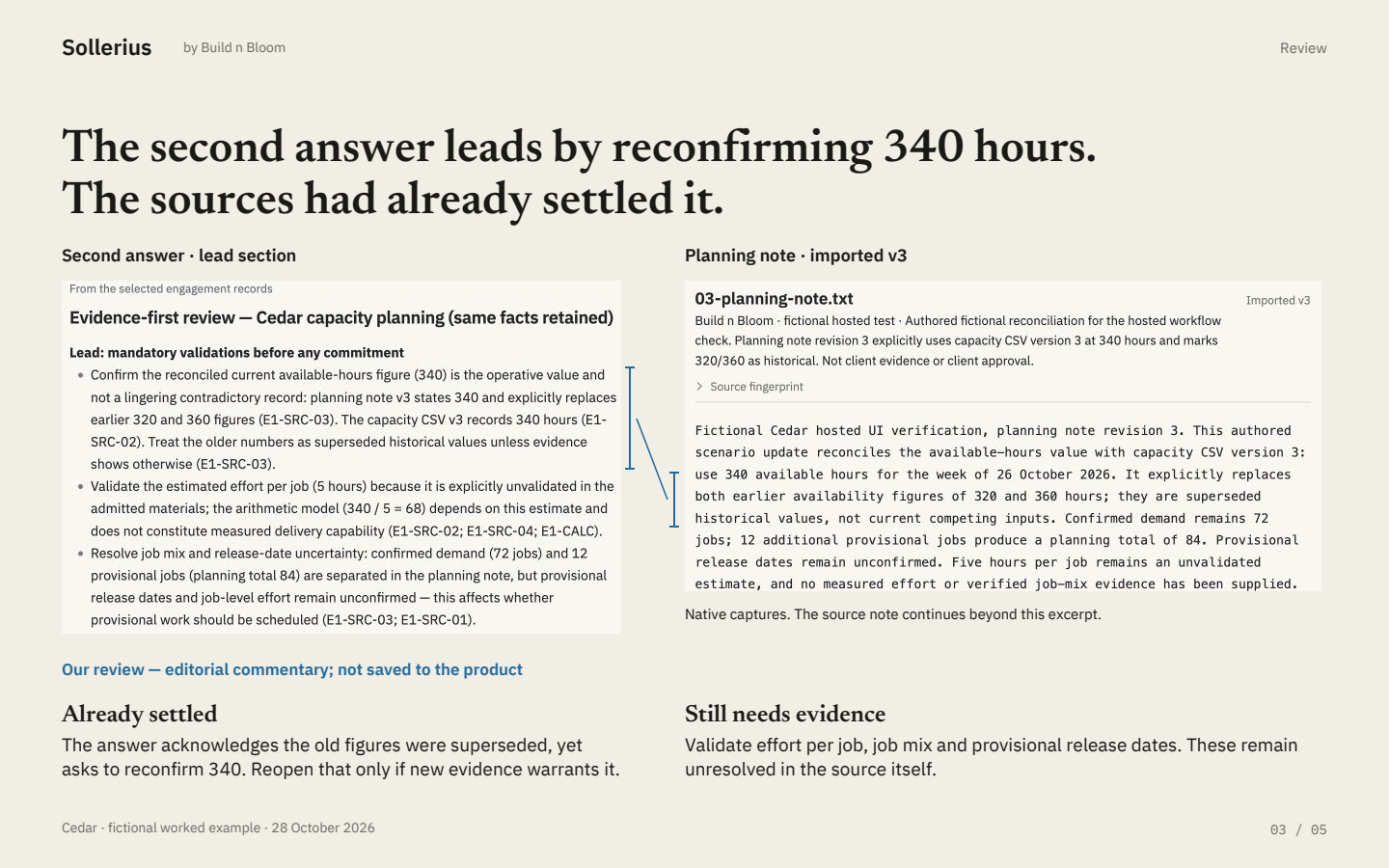
The second answer asks for confirmation that 340 hours is current—even though the planning note already reconciles that figure and supersedes 320 and 360. That extra check is unnecessary on the available evidence.
The important open questions are the five-hours-per-job estimate, provisional release dates and job mix. The presentation’s reviewer commentary identifies this weakness; it is not a saved correction inside the product.
This demonstrates an observed change in answer ordering. It does not demonstrate a saved, reusable firm method, autonomous execution or a measured time saving.
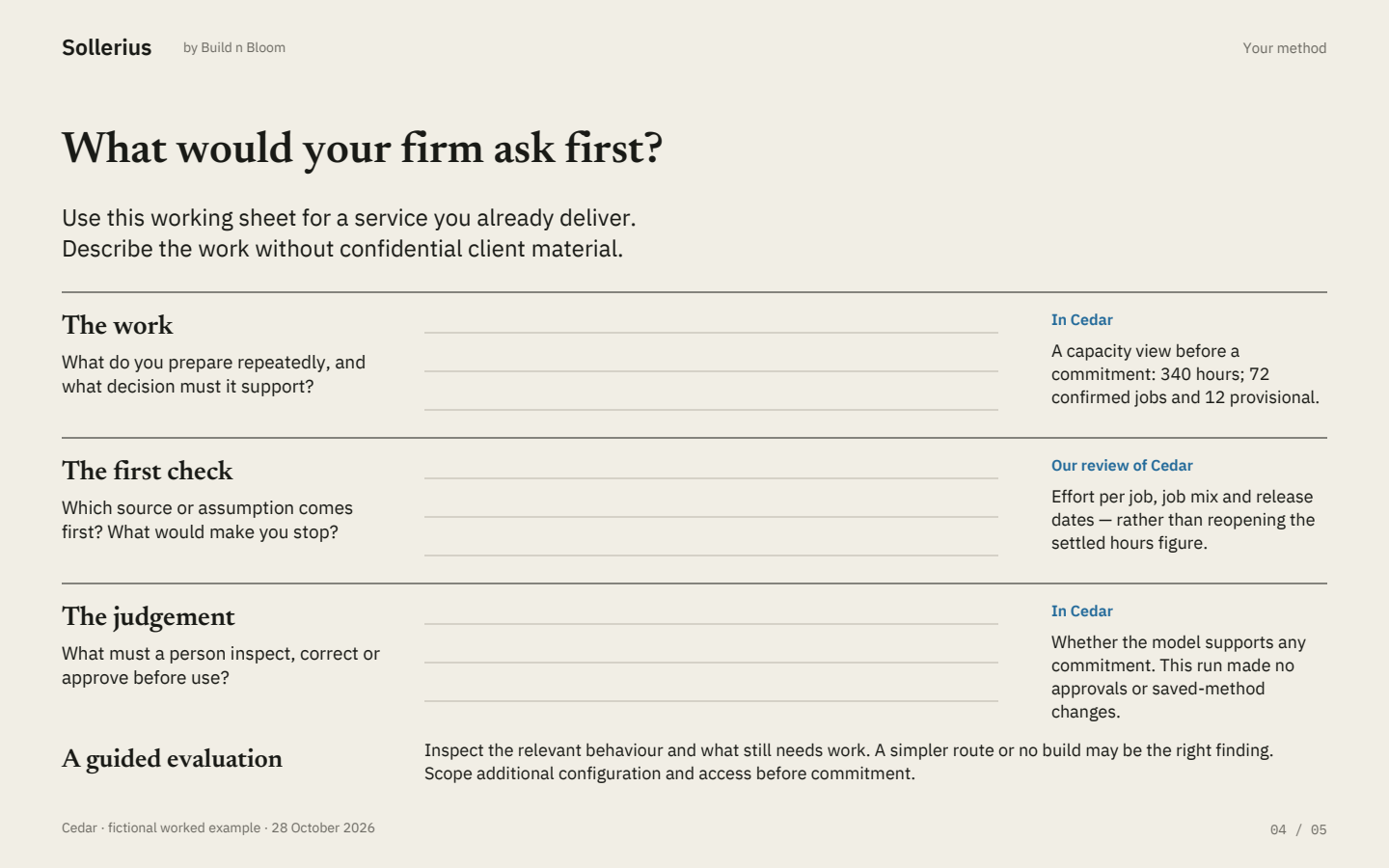
What would your reviewer ask first?
Choose a repeated task from a service your firm already delivers. Identify the decision it supports, the evidence required and what would make the reviewer return the output.