 Build n Bloom
AI transformation, built with your people.
Start with what you want the business to do next. We find the changes worth making, build the first one with your team and use the results to plan the next.
25 minutes with a founder · no fee · no confidential files
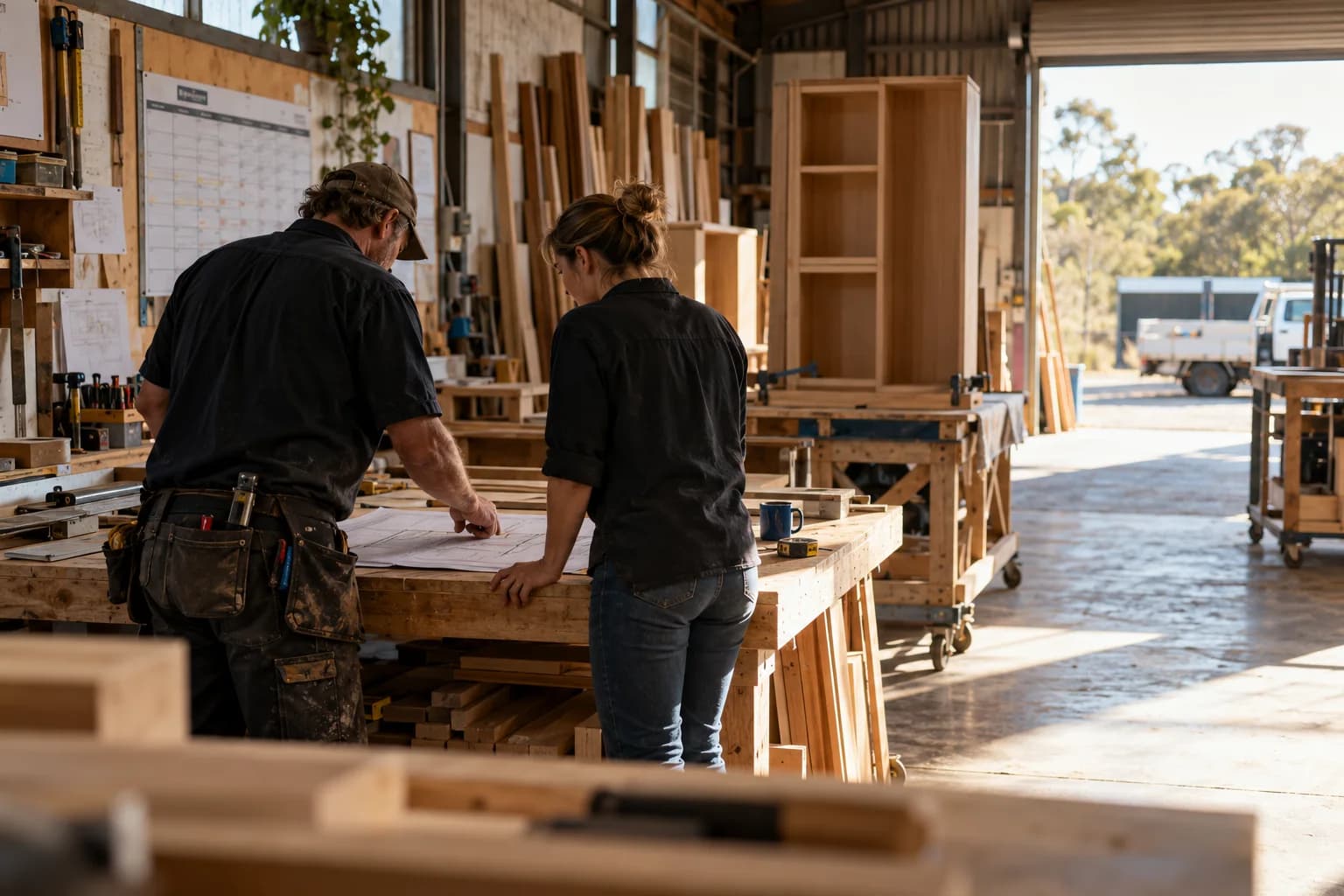
For specialist advisory firms and other small and boutique businesses. Explore our advisory work. Australia-based, working remotely mainly with Australia and the United States.
Begin with the business you want to build.
AI transformation changes how work is done. The useful question is what your business and team should be able to do next, then what would have to change to make that possible.
You might want to improve a service, give customers more attention or make room for an idea the team has put off. AI can be part of the answer. The method, source information, handoffs and people responsible for the work matter just as much.
We work with small and boutique businesses that have a team and repeatable work. Our role is to investigate useful opportunities, handle the design and technical build, and help the team operate what is installed. This is phased implementation with a practical end to each commissioned piece of work.
Look for the opportunity in the work.
- A service you already deliver
- Which preparation, analysis or review repeats? We can examine one recent job and ask where better information, a clearer method or assisted preparation would help the team serve the customer.
- Knowledge people need to use
- Which questions require someone to search across files, systems or colleagues? The first useful change may be organising the permitted sources and making their authority clear, before adding connected retrieval.
- A handoff that needs attention
- What must the next person receive, and who can confirm it is ready? An agreed check, a simpler template or a connection between existing systems may be enough.
- A capability you would like to offer
- Who would use it, what decision would it support and would it be worth delivering? We investigate usefulness, likely demand and delivery effort before recommending a build. An idea is a starting hypothesis.
Decide the next phase from the evidence.
Each phase leaves an output you can inspect and a decision you can make. The boundary, effort and timing are agreed for the actual work.
Understand · OutputA recent piece of work, its people and sources, and the ambition behind a change.
The decisionWhat should improve, what already works, and who can accept the result?
Read every phase and decision
- Understand
Output: A recent piece of work, its people and sources, and the ambition behind a change.
Decision: What should improve, what already works, and who can accept the result?
- Choose
Output: A bounded first task, simpler alternatives and the evidence still needed.
Decision: Improve the process, use current software, investigate further or scope a build?
- Build & test
Output: The agreed capability, representative tests and a way to recover from failure.
Decision: Does the complete job work as agreed, or must we correct and retest it?
- Put into use
Output: Practical training, written acceptance and an operating owner with usable instructions.
Decision: Can the team check, correct and operate the work, including exceptions?
- Measure
Output: Comparable records of quality, complete effort, exceptions and ongoing cost.
Decision: Keep it as it is, improve it, choose the next change or stop?
Our implementation method, not a fixed timetable or a completed client roadmap. Selecting a phase inspects it; it does not mark any work complete. Testing can return to correction, and measurement can lead to improvement, another change or stopping.
A sufficiently clear first capability can be quoted directly. A wider connected design may justify the optional Blueprint. Use the roadmap guide to prepare your own phased decision record.
The team helps shape how the work changes.
Keep what makes the business yours
The team brings its experience, standards and relationships. We ask what already works and what people want to preserve. Consequential decisions retain a named person who can inspect, correct, reject or approve.
The ambition is more useful capability and more choice about people's time. We test whether the change helps; we do not assume a tool purchase creates that outcome.
Make practice part of implementation
People work through ordinary cases and exceptions before handover. They learn what the system may use, what to check, how to report a problem and how to use the previous process when needed.
Training sits beside a clear operating owner and written instructions. New tools and further workflows earn their place through actual use.
A faster draft can still be the same amount of work.
Follow the effort through review, correction and operation. The fictional comparison below shows why we measure the complete job before deciding to expand.
Fictional arithmetic in person-minutes, assuming the same accepted output. Every minute belongs to one category only.
The total is unchanged. Preparation takes 45 minutes less. Review, correction and recurring operation together take 45 minutes more.
View all example values
- Preparation
- Current: 70 min · AI-assisted: 25 min
- Review
- Current: 20 min · AI-assisted: 35 min
- Correction
- Current: 10 min · AI-assisted: 30 min
- Allocated recurring operation
- Current: 5 min · AI-assisted: 15 min
- Total active effort
- Current: 105 min · AI-assisted: 105 min
Fictional figures, not client results or a benchmark. Preparation, review, correction and allocated recurring operation do not overlap. Initial setup, training and cash costs are excluded here and need separate assessment. Waiting time is recorded separately.
Define accepted output, complete effort, exceptions, costs and actual use in the measurement worksheet. Record waiting time separately. Acceptance establishes agreed behaviour on test cases; continuing value needs observation.
A clear scope before you commit.
- Start with the conversation
- A free, 25-minute Fit Call with a founder. Keep a short reviewed provisional Fit Note whether or not you proceed; we agree its delivery time during the call. No preparation or confidential files are needed.
- Choose the useful next step
- A directly scoped Build or Connected Build when the boundary is clear. An optional paid Blueprint when the design needs work first: one important revenue path, three complete connected designs and a ranked first installation. A simpler route or no build may be the right answer.
- Accept work you can operate
- The quote records scope, fees, dependencies, date and written acceptance tests. Installation is separately commissioned. Thirty calendar days of in-scope stabilisation follow written acceptance. Continuing support is optional; there is no automatic retainer.
The Blueprint fee-credit and refund rules and installation remedies are set out in the full service guarantee. It covers the agreed deliverable and tests, rather than revenue, savings or adoption. See what an implementation quote should cover.
Questions about AI Transformation.
What does AI transformation mean for a small business?
A deliberate change to how useful work gets done, involving the people, information, decisions and tools around it. We start with a business objective and implement a contained improvement, then use the evidence to decide what should change next. It is not a requirement to replace every system.
How is this different from ChatGPT or Claude implementation?
ChatGPT + Claude Implementation starts with putting a chosen workspace and agreed tasks into use with a team. AI Transformation starts with a wider business question and the sequence of changes it needs. A tool rollout can be one part of that sequence.
Must we replace our current software?
No. A clearer process, a better configuration or a supported feature in a product you already pay for may be sufficient. We compare those routes before recommending custom work. A new connection is scoped only where the information and the job justify it.
How long does AI transformation take?
There is no universal timetable. Availability of source owners and reviewers, access to systems, the condition of the information and the chosen boundary affect delivery. Each commissioned phase has a written scope, dependencies and delivery date. Completing one build does not mean the whole business has been transformed.
What if we already use AI?
We start by finding what works and what your team would like to improve. Existing useful tasks can remain. The next opportunity may sit around them: getting the right information into the work, reviewing outputs, connecting a handoff or helping more people operate the task consistently.
Will you train the people who use it?
Training and an operating handover are part of the agreed installation. People practise representative work, checking, correction and recovery. Broader training or the creation of further workflows can be separately scoped; we do not assume one training session makes everyone an implementer.
Is ongoing support compulsory?
No. Thirty calendar days of in-scope stabilisation follow written acceptance. Your team can then operate the agreed system using the handover, or commission defined continuing support or further work separately. There is no automatic retainer.
Can you help our specialist advisory firm?
Yes. Specialist advisory is our primary focus. We work on services the firm already delivers and investigate useful new services, while its people keep professional judgement and client relationships.
Make the next decision with a useful guide.
- Build a roadmap with decisions, not promisesA phased planning sheet, a fictional worked example and the evidence each next step needs.
- Choose a first workflow worth improvingCompare candidate jobs, simpler options, source readiness and the person who can accept the result.
- Compare the actual work behind a quoteSeparate professional work, licences and ongoing operation before comparing prices.
The first change may use tools you already have.
ChatGPT + Claude Implementation is one possible starting point when the immediate need is a working setup and repeatable tasks for your team. See the kinds of systems we build when the useful change needs an integration, workflow or internal tool.
We agree source permissions, access and processing boundaries for each scope. Read security and governance. Enterprise-wide programmes and new healthcare or disability-services work are outside this general-business route.
What would you like your business and team to be able to do next?
Bring one part of the work you would like to improve or make possible. We'll help you understand where AI could be useful and agree the next worthwhile decision.
Free 25-minute Fit Call · keep a reviewed provisional Fit Note · timing agreed during the call