
Map one important path
How work moves from relevant enquiry and scope through delivery, acceptance, collection and permitted reuse. Establish the baseline, owners, sources and exceptions.
A standalone design engagement for specialist advisory firms. Decide what is worth building from the work, the evidence and a comparison with simpler options.
How the Fit Call worksBuyer-specific scope, fee, effort and dates. Keep the designs and choose your implementer.
A supported recommendation to simplify, defer or stop is a legitimate result, and the refund promise still applies.
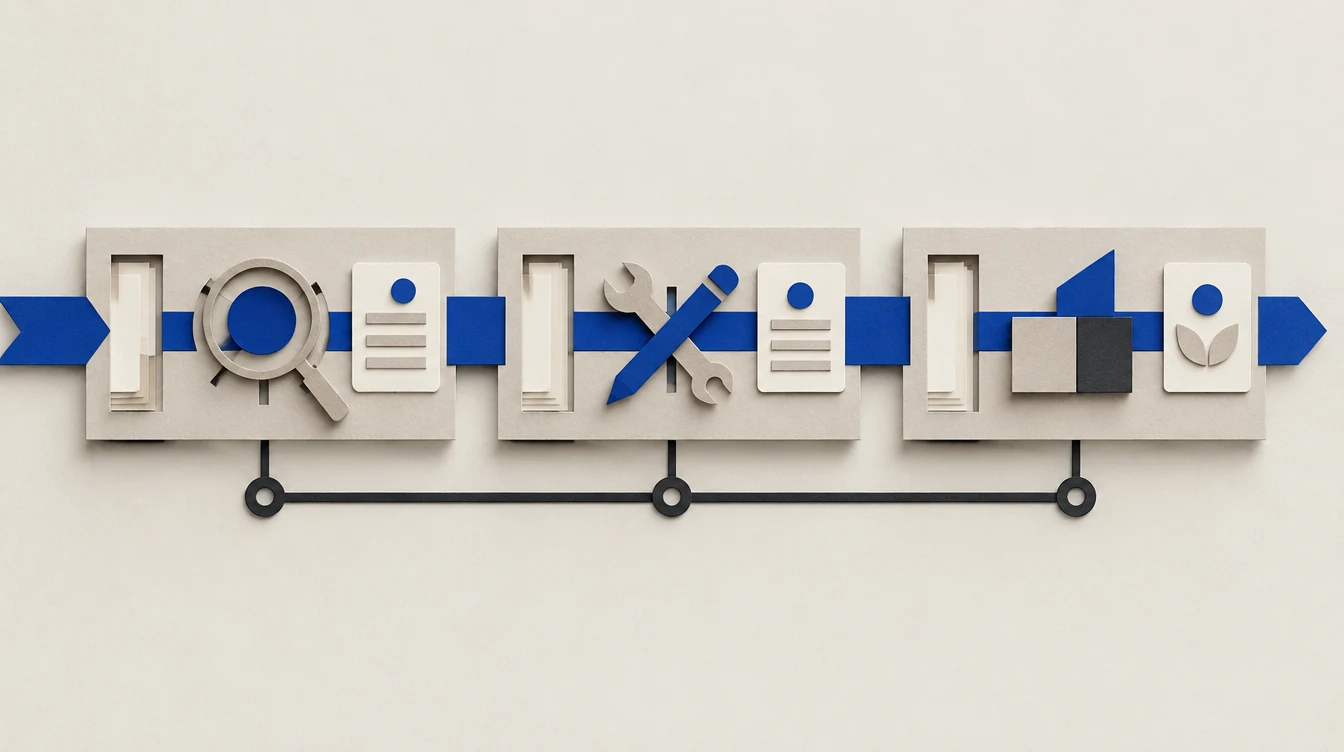
If preparation speeds up but source checking, correction or acceptance gets harder, the firm may be moving effort rather than releasing it.
The useful future is work that arrives with its sources, unresolved questions and decision owner visible. The Blueprint designs the complete accepted path, compares the whole effort and makes the dependencies inspectable before installation money is committed.
How work moves from relevant enquiry and scope through delivery, acceptance, collection and permitted reuse. Establish the baseline, owners, sources and exceptions.
A complete design for each: work, permitted inputs, human and AI responsibilities, tool fit, ownership, failure recovery, economics, acceptance tests and simpler alternatives.
Shared sources and controls, a ranked first installation and a decision review. Each opportunity receives an install, defer or no-build recommendation.
The three opportunities come from your evidence. They are not three predetermined tools or three promised installations.
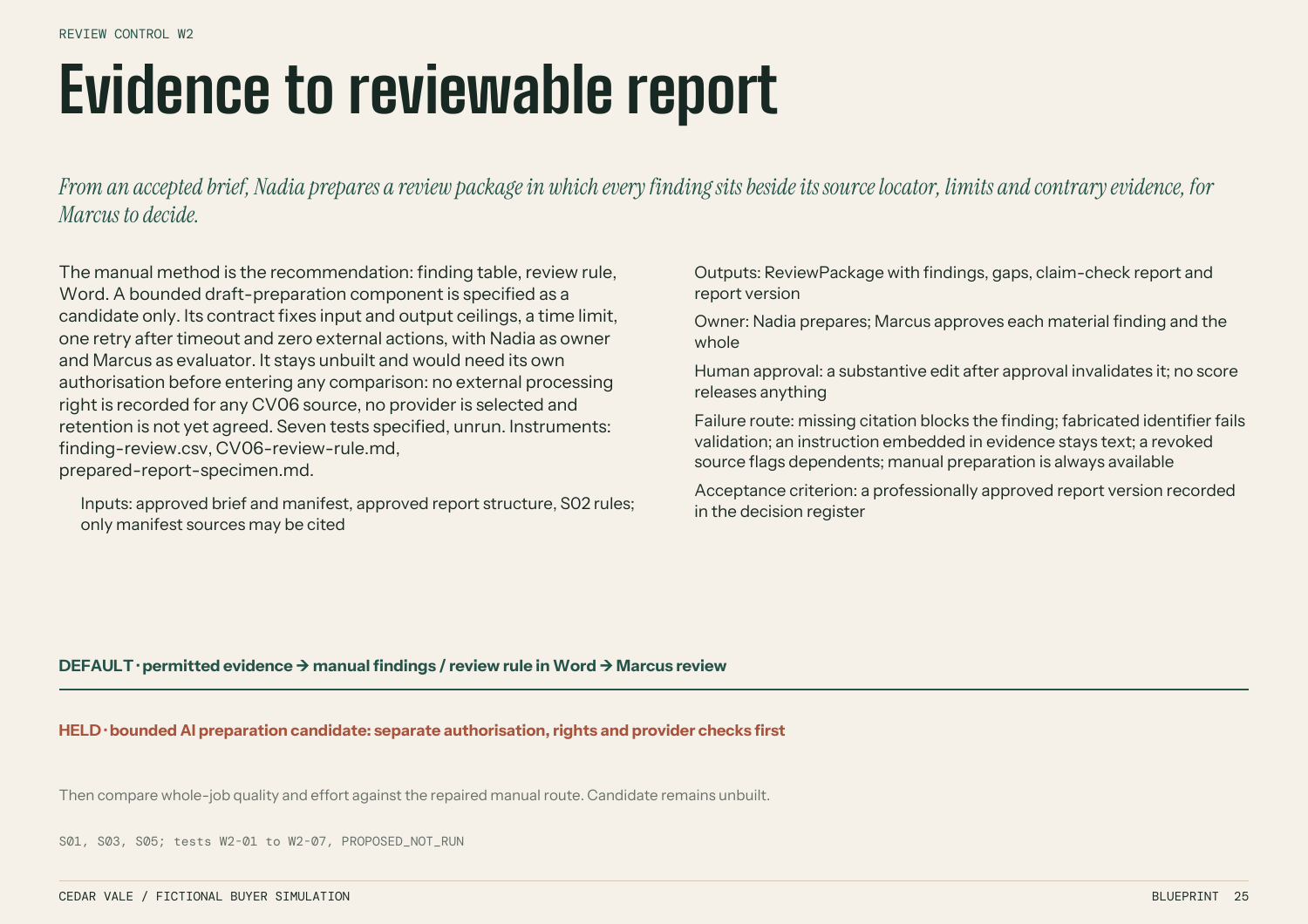
The Cedar Vale example shows the source, decision and control detail. It starts with a manual, source-linked review and holds a bounded AI candidate until separate evidence and permission exist. A supported no-build recommendation is a useful design result.
Read the fictional exampleFictional, dated demonstration. Its figures are not current pricing or client outcomes.
A repeated paid service or evidenced service opportunity presents three connected, consequential choices; owners and reviewers are available; and permitted evidence can support the design decision.
Demand is untested, current tools already solve the job, or access and evidence are not agreed. A method repair or demand check may be the useful next step.
These are fit questions to assess together.
Use a concise brief to align the service owner, reviewer and budget decision-maker: the question, purchased scope, buyer contribution, alternatives, guarantee and evidence still needed.
Open the shareable decision briefA generic discussion aid, not a quote or approval. Forward it with the question you want your colleagues to decide.
Keep the parts that work. A Blueprint is worth considering where the remaining job needs connected sources, responsibilities, permissions, exceptions and acceptance criteria designed together. Compare that value with improving your current method.
Yes. You keep the delivered Blueprint and its agreed use rights. Your own team or another competent implementer can use it. Installation with Build n Bloom is separately scoped.
A buyer-specific quote sets the proposed scope, fee, effort, delivery dates, participants, evidence needs and applicable guarantee. Work starts after the applicable terms are signed, the agreed upfront Blueprint fee is received, and owners, evidence routes and permissions for the scope are confirmed. Booking a Fit Call creates no purchase.
No. Installation, production access and any external actions need their own agreed scope and permissions. You review the designs before deciding whether to commission a first installation.
No. The Blueprint delivers three complete connected designs, shared controls and a ranked first installation. A first installation is a separate scope, fixed quoted fee, acceptance decision and delivery plan.
After both complete Blueprint delivery and its decision review, you have 14 calendar days to request a full cash refund if you do not believe it was worth the agreed fee. The window starts at the later event.
No defect proof, correction round or installation purchase is required. Refunds are made within five business days. You keep the Blueprint and agreed use rights, including when the recommendation is to simplify, defer or stop.
Installation has its own agreed scope, fixed fee, deposit, delivery date, core tests, authorised reviewer and restoration plan. The remaining balance is payable on written acceptance; payment, use or silence alone is not acceptance. Thirty calendar days of in-scope stabilisation are included after written acceptance.
If a core workflow or essential agent fails agreed tests, correction and retest are at no extra charge within ten business days after the failure report and agreed lawful evidence/access. Genuine dependency pauses need a documented, agreed revised date; provider-controlled delays are not client dependencies. A workaround or scope reduction needs your explicit agreement.
If the core workflow still fails at the end of that period, you may stop. All installation fees actually paid for that scope and the associated Blueprint fee actually paid are refunded within five business days; the remaining installation balance is waived and agreed restoration and handover are completed at no extra charge. Account for earlier refunds: the associated Blueprint is refunded only once. A core failure reported during stabilisation uses the same remedy even if resolution falls later.
Agree a revised written delivery plan at no extra charge or end the installation and receive its fees actually paid within five business days. The Blueprint keeps its own satisfaction promise unless the core-workflow failure remedy applies.
The written guarantee and buyer-specific quote govern. External business outcomes are not guaranteed. This voluntary promise is additional to statutory rights; its window does not limit independent material-defect remedies. Optional continuing support is separately agreed and does not start automatically.