
Sources you can inspect
Where the files disagree, the example records reconciliation work and unresolved assumptions.
Inspect the reasoning behind one revenue path, three connected designs, shared controls and a decision review.
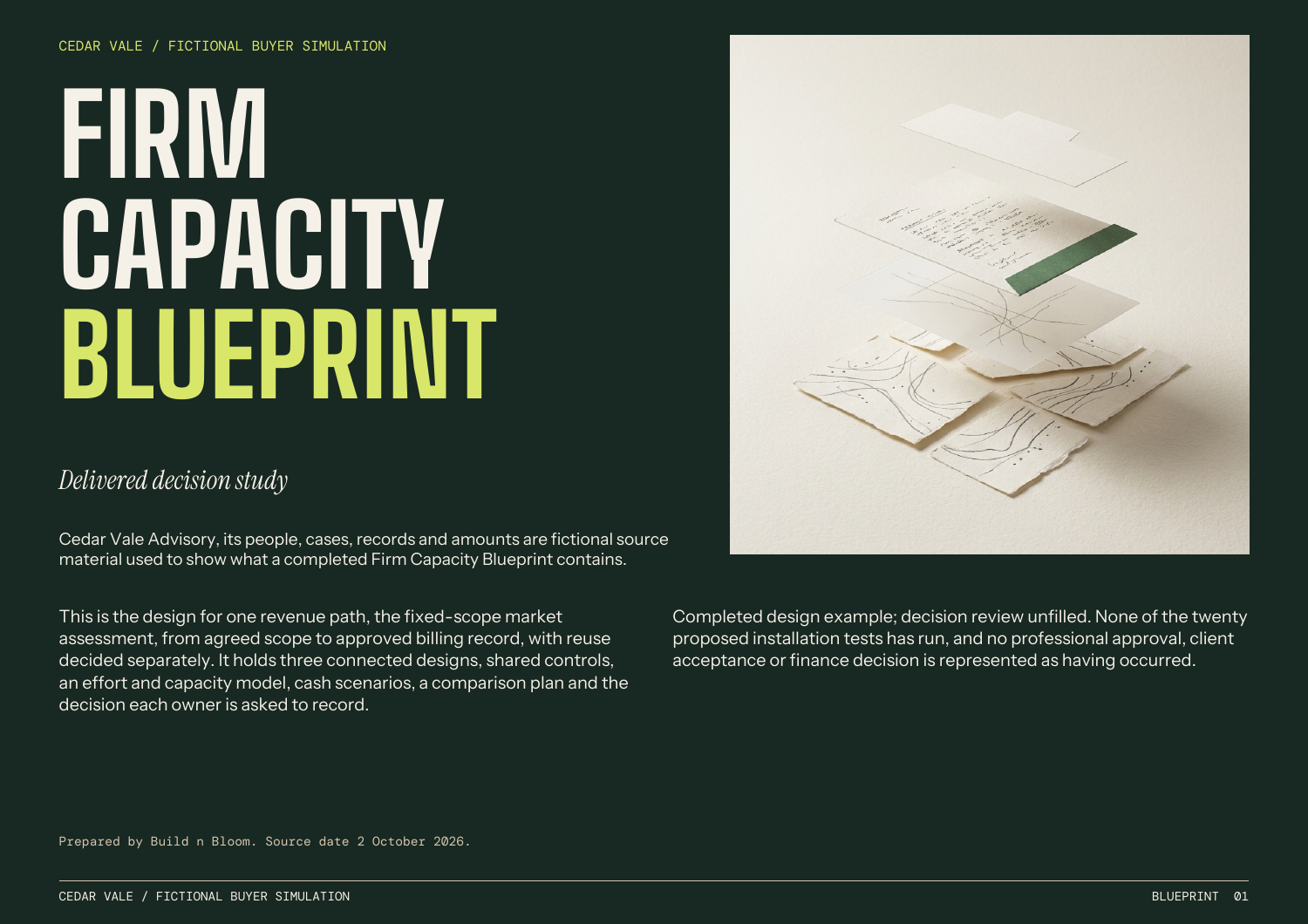
Open the 61-page sample Download the fictional reference packCedar Vale’s firm, people, records, figures, demand and recommendation are fictional. Its dated scenario figures are not current prices or client outcomes. The reference pack holds editable fictional working instruments and example artifacts; it is not an installed implementation kit.
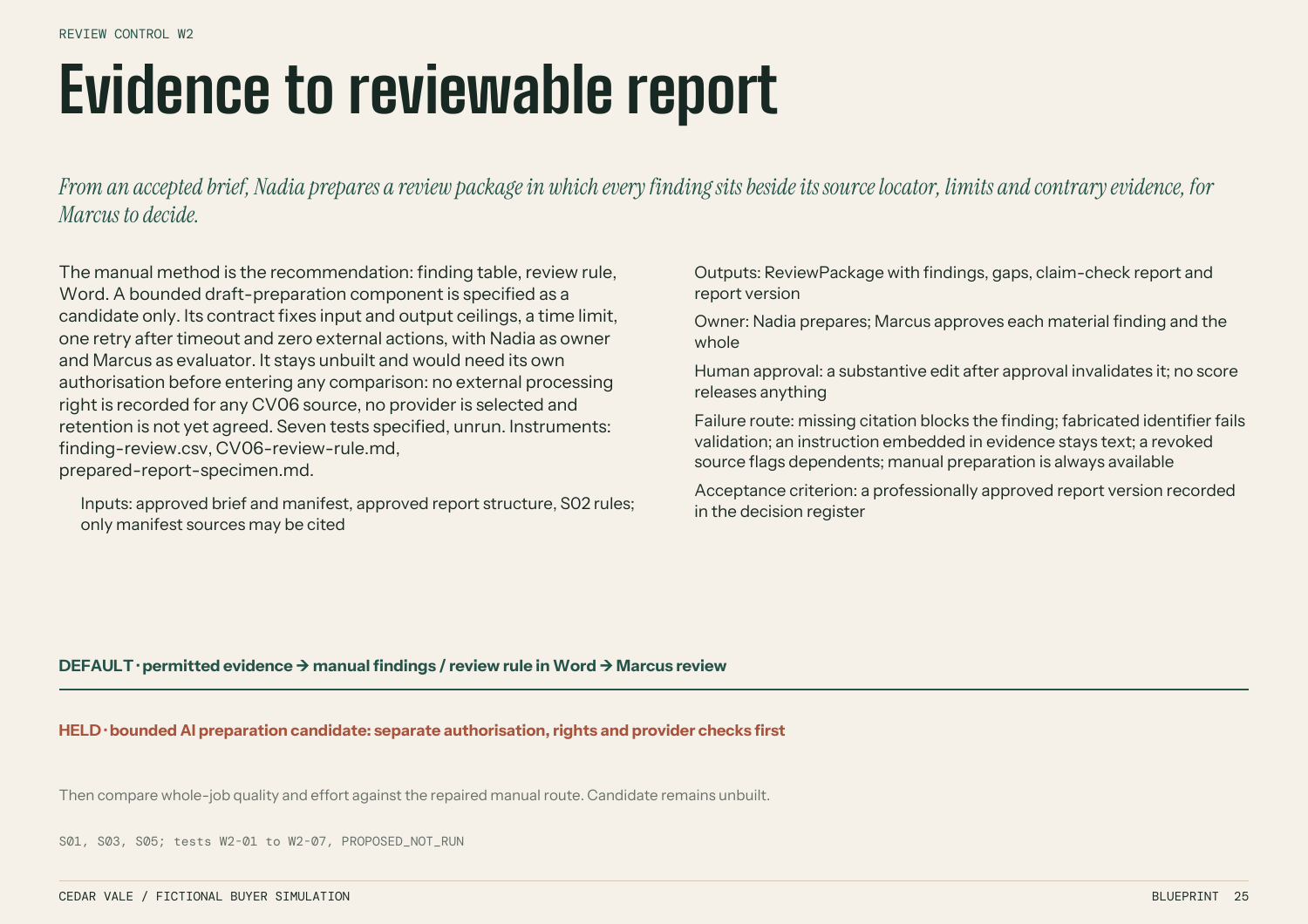
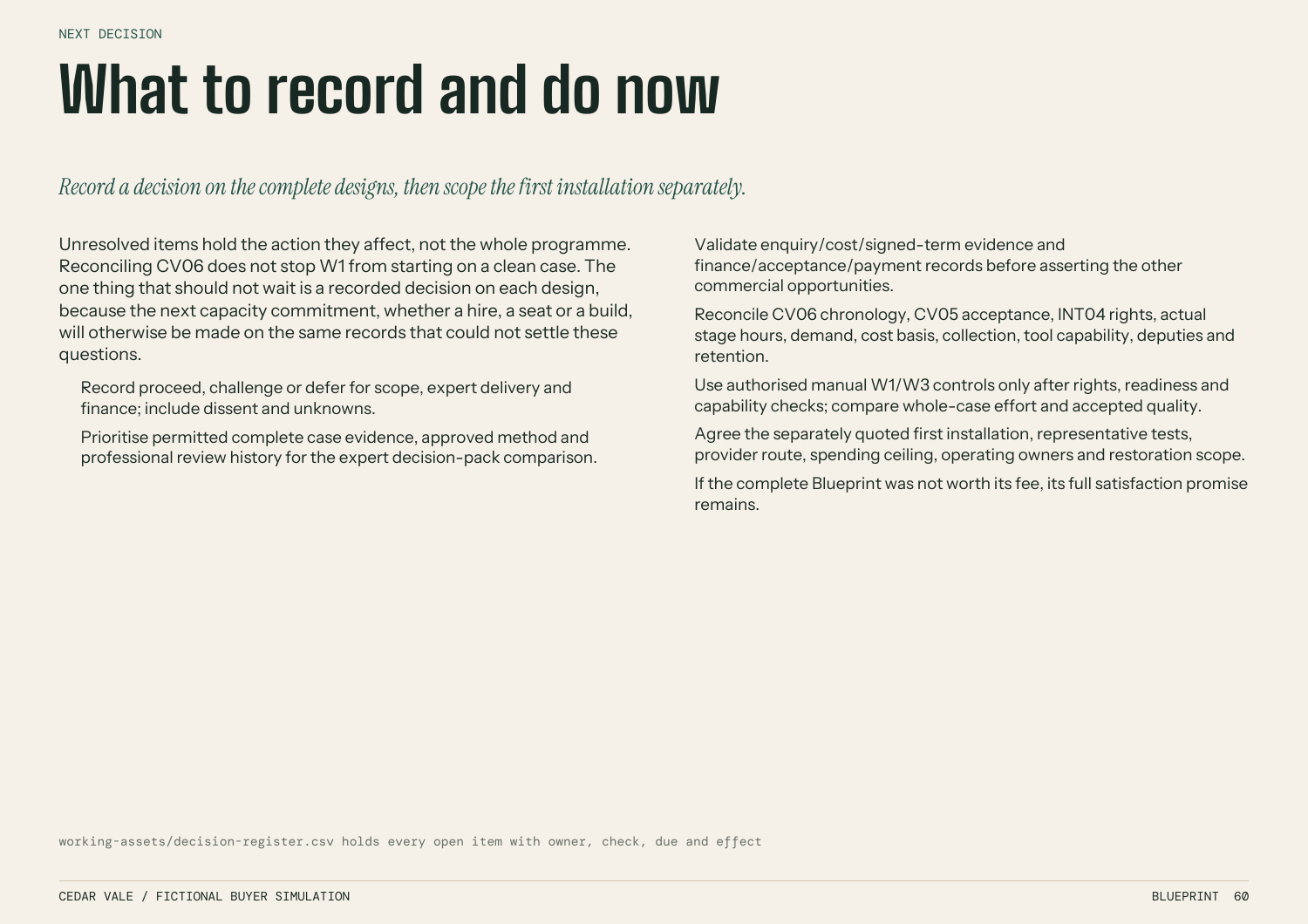
Read the next decision on pages 59–60. Inspect a complete design on page 25, including the sources, human decision and simpler alternative. Then look for the evidence that would reverse the recommendation.
The default here is a manual, source-linked review first, with a bounded AI candidate held until separate evidence and permission exist. The decision review is left unfilled and the installation tests are proposed, not run. Notice how the report makes the choice usable.
A source beside the finding. A visible unresolved gap. A qualified person deciding what is ready.
Compare that structure with one recent engagement your own firm delivered.
Reader guide: pages 7–12 show the three jobs. Start where you need to:Next decision, pages 59–60Design, page 25Guarantee, pages 57–58On a phone, turn it sideways and zoom in for tables.
Where the files disagree, the example records reconciliation work and unresolved assumptions.
Each design names what a person decides, what they need to see and what AI-supported work may do around it.
The report starts with a manual, source-linked review. Installation tests are proposed, not run, and a build is a separate decision that must earn its place.
Walk through the question, recent engagement, provisional Fit Note and later evidence check. See how the existing-service and new-service routes lead to different next steps.
Walk through an example discoveryThe walkthrough follows fictional Marlow Street Advisory. The downloadable Cedar Vale Blueprint is a separate fictional example. Both are authored demonstrations; they show reasoning, not live AI, client results or your firm’s diagnosis.
Its length follows the actual path and evidence. The buyer-specific written quote sets the scope, effort, dates and fee.
Yes. The report and fictional reference pack are openly available without a meeting or form. Keep their fictional labels when sharing. Use the concise decision brief to discuss the question your firm would want answered.
No. Inspect it at your own pace. A real installation is separately scoped after the complete Blueprint and decision review.
Bring one service and a recent engagement—or a new-service idea—to a free 25-minute Fit Call with a founder. You receive a reviewed provisional Fit Note to keep whether or not you continue.
How the Fit Call worksNo confidential files or formal preparation. The Note’s delivery time is agreed when you book.